
Cet article est actuellement disponible en anglais uniquement.
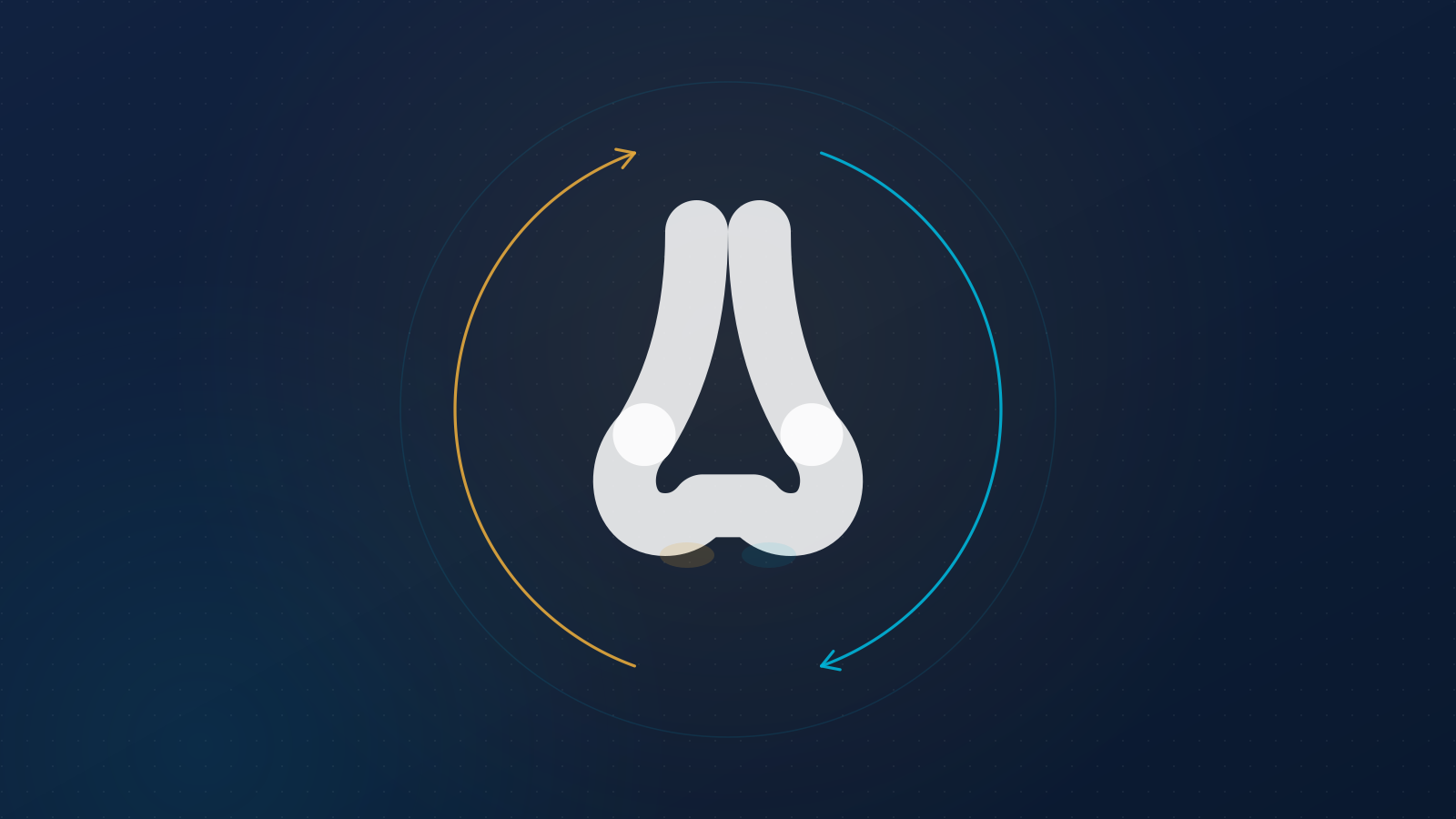
One of your nostrils being more blocked for a few hours is not always a sign of disease. It has a name: the nasal cycle, the natural rhythm of the nose.
There is a sentence we often hear in clinic: "One side of my nose gets blocked, then the other." Patients usually come in thinking this is a problem. In fact, to a certain extent, it is how a healthy nose normally works.
Turbinates: the "adjustable" structures inside the nose
On the inner side walls of the nose there are structures called turbinates. They contain a very rich network of blood vessels. When these vessels fill with blood the turbinate swells, and when they empty it shrinks. In this way the nose can adjust the amount of air passing through it, almost like a valve.
How does the nasal cycle work?
- One side swellsAt certain times of the day the turbinates on one side swell slightly and less air passes through that side.
- The other side opensAt the same time the other side opens up a little more.
- They switchAfter a while, the two sides swap roles, and the cycle continues.
This process is largely controlled by the autonomic nervous system, the part of the nervous system we do not consciously control, and it is seen in healthy people too.
Why don't we usually notice it?
Because one side opens as the other narrows, the total amount of air passing through the nose usually does not change much. That is why most people never notice the nasal cycle. It tends to be noticed:
- During a cold or allergy, when the lining is already swollen
- In people with a septum deviated to one side, when the cycle reaches the narrower side
- At night when lying down and trying to fall asleep, when we pay more attention to the nose
Why does the lower side block when you lie on your side?
When you lie on your side, you may feel more blockage on the lower side. This is largely a response of the blood vessel network in the turbinates to body position. If you turn to the other side, you may notice after a while that the blockage switches sides too.
Why does the nasal cycle exist?
We don't know exactly why the nasal cycle exists. According to one view, while one side carries more air, the lining of the other side keeps its moisture and continues its cleaning work. There are also theories that it may contribute to the sense of smell.
When is it not just the nasal cycle?
The nasal cycle alternates between the two sides and usually does not bother you. Another cause should be suspected if:
- The blockage is always on the same side
- It is very pronounced and makes breathing difficult
- It bothers you throughout the day or disturbs your sleep
- It comes with one-sided bloody or foul-smelling discharge, loss of smell or facial pain
What do we look at during the examination?
By examining the inside of the nose, we check whether the septum is straight, how large the turbinates are and what condition the lining is in. If needed, a thin camera (endoscopy) is used to assess the deeper parts of the nose. Sometimes we look again after spraying a decongestant that temporarily shrinks the turbinates; this helps distinguish whether the blockage comes from swelling tissue or from a structural narrowing such as the septum.
Is treatment needed?
The nasal cycle itself is not a disease and does not need treatment. Treatment is planned for any underlying cause of the blockage: suitable medication and nasal sprays for allergy, or options such as septoplasty or turbinate reduction for a structural problem.
I would like to add a warning here: long-term use of over-the-counter decongestant sprays to clear a blocked nose can, over time, make the nose dependent on them and make the blockage worse.
Frequently asked questions
Does lying on the other side help when one side is blocked? Often, yes. Because the lower side tends to block more when you lie on your side, turning so that the blocked side is on top can bring relief.
Do children have a nasal cycle too? Yes. But if a child has constant one-sided blockage and discharge, they should be examined for causes such as a foreign object in the nose.
Can the nasal cycle stop completely? In a normal nose the cycle continues. If the same side is always blocked, that may be a sign of another problem rather than the cycle.
Cet article est fourni à titre d’information générale et ne remplace pas un examen.